Dental veneers are thin shells of ceramic or composite bonded to the visible surface of the front teeth. They change shape, colour, length and — within reason — the apparent position of a tooth, without touching the root or the bone.
What a veneer can and cannot fix
Veneers work well on problems of the surface: staining that does not respond to whitening, chipped edges, fine cracks in the enamel, slightly rotated teeth, small gaps.
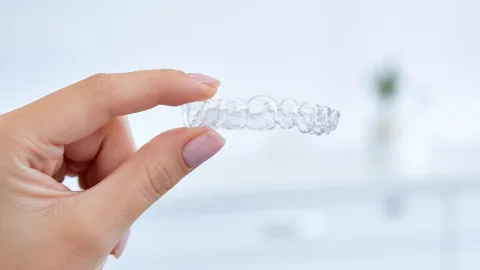
They are not a substitute for orthodontics. If teeth are severely crowded or the bite is unbalanced, a veneer only masks the problem while the forces behind it remain. In those cases, straightening the teeth first gives a more stable result and usually requires less tooth reduction.
Ceramic or composite
Ceramic veneers are made in a laboratory from an impression or a digital scan. They resist staining better and imitate the way natural enamel handles light.
Composite veneers are built directly on the tooth in a single visit. They cost less and are easy to repair, but they lose their gloss sooner and pick up colour over time from coffee, tea or smoking.
How treatment runs
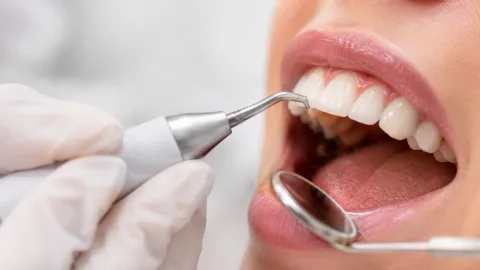
- Consultation and planning. Gum and tooth health are assessed, photographs are taken and usually a digital scan. Any decay or gum disease is treated first.
- Designing the smile. Shape and proportion are set digitally or in wax, so the result can be seen before any tooth is touched.
- The mock-up. A temporary version is placed over the unprepared teeth, so you can judge how it looks and how you speak and smile.
- Preparing the tooth. A thin layer of enamel is removed, roughly the thickness of the veneer. How much depends on the case — sometimes it is minimal.
- Bonding. The final veneers are adhesively cemented, the bite is checked and the margins polished.
How long they last
Lifespan depends more on habits than on material. Grinding is the main risk, and a night guard protects the work. Biting nails, opening packaging with your teeth or chewing ice causes chips.
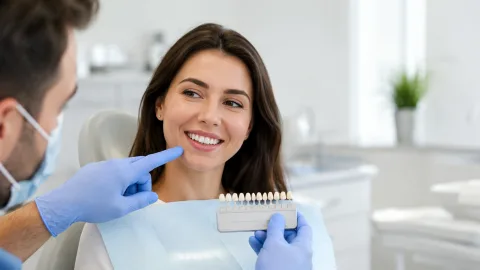
Otherwise care is ordinary: brushing twice a day, floss, regular check-ups. Veneers do not respond to whitening, so the shade is chosen at the start, with your dentist.
Are they worth it?
For patients with healthy teeth who dislike how they look, veneers give a predictable change quickly. Where there are functional problems — an unbalanced bite, gum disease, untreated decay — the right order is health first, appearance second.
This article is general information and does not replace a consultation. The right treatment can only be decided after a clinical examination.